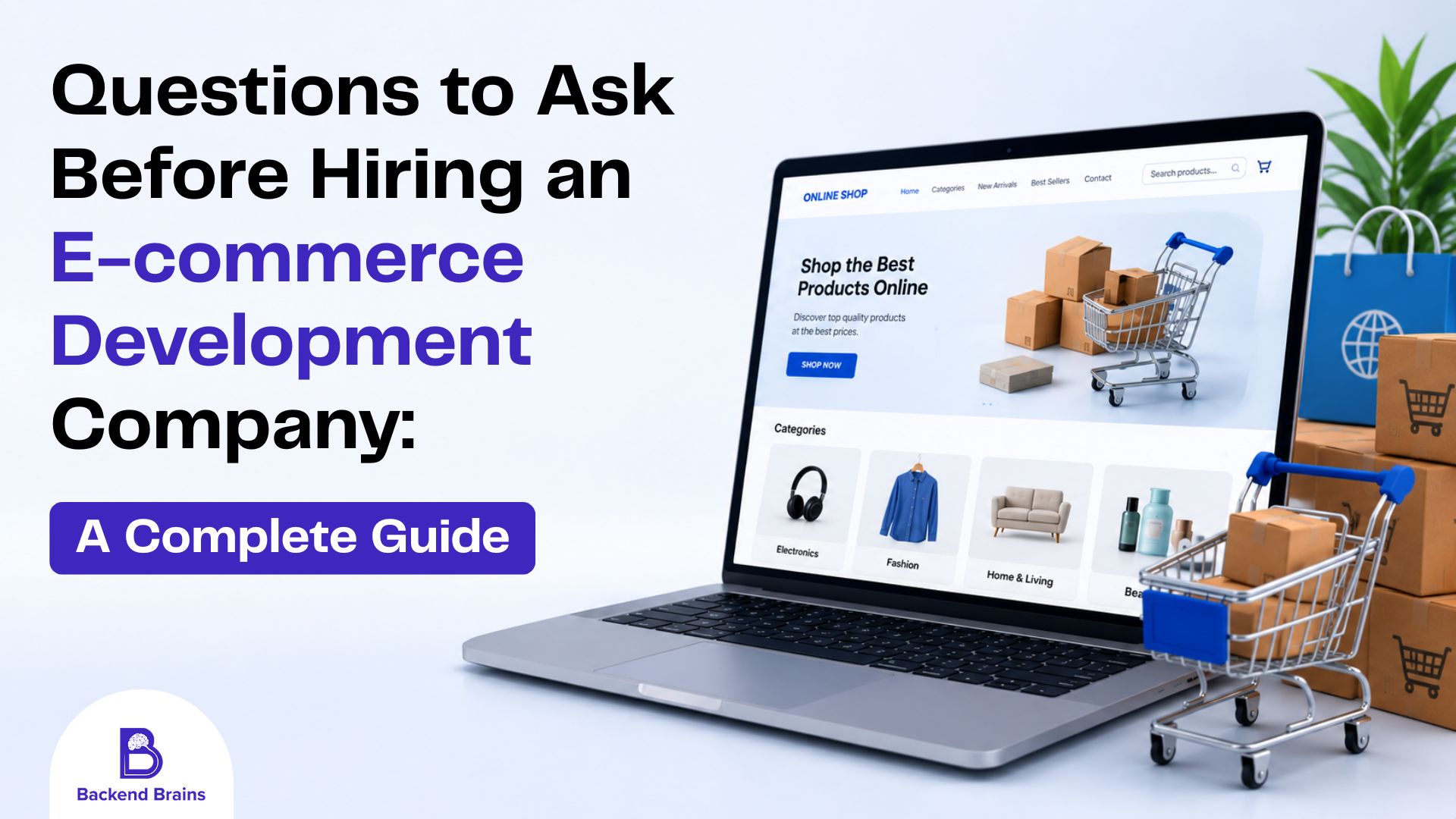

Questions to Ask Before Hiring an E-commerce Development Company: A Complete Guide
Launching an e-commerce business is no longer just about having an online store. Today's customers expect a fast, secure, mobile-friendly, and personalized shopping experience. Whether you're starting a new online business or upgrading an existing store, choosing the right e-commerce development company is one of the most important decisions you'll make.
The wrong partner can lead to missed deadlines, poor performance, security issues, and lost revenue. On the other hand, an experienced development company can help you build a scalable, user-friendly online store that drives sales and supports long-term growth.
Before signing a contract, it's essential to ask the right questions. This guide covers everything you should know before hiring an E-Commerce Development Company.
Why Choosing the Right E-commerce Development Company Matters
Your e-commerce website is more than just a digital storefront - it's your business's primary sales channel. Every aspect of your website, from design and speed to security and checkout experience, directly impacts customer satisfaction and conversions.
A professional development company will help you:
- Build a high-performing online store
- Improve user experience
- Increase conversion rates
- Ensure website security
- Optimize for SEO
- Scale your business as it grows
- Reduce long-term maintenance costs
That's why selecting the right development partner deserves careful consideration.
1. What Experience Do You Have with E-commerce Development?
Experience should be your first consideration.
Ask how long the company has been developing e-commerce websites and which industries they specialize in.
Look for experience in:
- Retail
- Fashion
- Healthcare
- Electronics
- Grocery
- B2B Commerce
- Manufacturing
An experienced company understands customer behavior, checkout optimization, payment integrations, and inventory management.
2. Which E-commerce Platforms Do You Specialize In?
Different businesses require different platforms.
Ask whether they specialize in:
- Shopify
- WooCommerce
- Magento (Adobe Commerce)
- BigCommerce
- OpenCart
- Custom Laravel Development
- Headless Commerce
The company should recommend the platform based on your business goals rather than pushing their preferred technology.
3. Can You Show Your Portfolio?
Always ask to see previous projects.
Review:
- Website speed
- Mobile responsiveness
- User interface
- Product pages
- Checkout flow
- Navigation
- Overall design quality
If possible, ask for examples similar to your industry.
4. Do You Provide Custom E-commerce Solutions?
Many agencies simply install ready-made themes.
Ask whether they can build:
- Custom UI/UX
- Custom checkout process
- Advanced search
- Custom product filters
- Marketplace solutions
- Multi-vendor stores
- Subscription platforms
Custom solutions allow your business to stand out from competitors.
5. How Will You Improve Website Performance?
Website speed directly affects sales.
Ask about:
- Image optimization
- Lazy loading
- Code optimization
- CDN implementation
- Browser caching
- Core Web Vitals
- Database optimization
A slow website can significantly reduce conversion rates and increase cart abandonment.
6. Is SEO Included in Development?
Many businesses overlook SEO during development.
Ask whether they provide:
- SEO-friendly URLs
- Meta tags
- Schema markup
- XML Sitemap
- Robots.txt
- Canonical tags
- Optimized page speed
- Mobile optimization
- Structured navigation
Building SEO into your website from day one saves time and money later.
7. How Do You Handle Mobile Optimization?
More than half of online shopping now happens on smartphones.
Ask if your store will include:
- Responsive design
- Mobile-friendly checkout
- Fast mobile loading
- Touch-friendly navigation
- Mobile payment options
A poor mobile experience means lost sales.
8. What Security Measures Do You Implement?
Security is essential for customer trust.
Ask about:
- SSL certificates
- Secure payment gateways
- Data encryption
- Two-factor authentication
- Regular security updates
- Firewall protection
- PCI-DSS compliance
- Malware monitoring
Protecting customer information should always be a priority.
9. Which Payment Gateways Can You Integrate?
Customers expect flexible payment options.
Common integrations include:
- Stripe
- Razorpay
- PayPal
- Square
- Apple Pay
- Google Pay
- Amazon Pay
- Bank transfers
Ask whether additional gateways can be added in the future.
10. Do You Integrate Shipping Solutions?
Shipping affects customer satisfaction.
Ask about integrations with:
- FedEx
- UPS
- DHL
- Shiprocket
- USPS
- Blue Dart
- Delhivery
Also ask about real-time shipping calculations and tracking.
11. Will the Website Be Scalable?
Your business will grow over time.
Ask if the website can handle:
- More products
- Higher traffic
- International expansion
- Multiple warehouses
- Multi-language support
- Multi-currency support
Scalability prevents costly redevelopment later.
12. Who Owns the Website Code?
Always clarify ownership.
You should own:
- Source code
- Website files
- Database
- Domain
- Hosting accounts
- Design assets
Avoid agencies that lock clients into proprietary systems.
13. What Is Included in the Development Cost?
Ask for a detailed cost breakdown.
Understand charges for:
- Design
- Development
- Testing
- Hosting
- Maintenance
- Third-party licenses
- Plugins
- Support
Transparent pricing prevents unexpected expenses.
14. What Is Your Development Process?
Professional companies follow a structured workflow.
Typical stages include:
- Requirement Analysis
- Wireframing
- UI/UX Design
- Development
- Testing
- Client Review
- Launch
- Support
Clear communication at every stage helps avoid misunderstandings.
15. How Long Will the Project Take?
Every project should have a realistic timeline.
Ask for:
- Project milestones
- Weekly updates
- Delivery schedule
- Buffer time
- Launch plan
Avoid companies that promise unrealistically fast delivery.
16. Do You Offer Post-Launch Support?
Development doesn't end after launch.
Ask whether they provide:
- Bug fixes
- Security updates
- Performance optimization
- Feature enhancements
- Backup management
- Server monitoring
Long-term support is crucial for maintaining a successful online store.
17. Can You Help with Digital Marketing?
A beautiful website won't generate sales without traffic.
Some development companies also offer:
- SEO
- Google Ads
- Social Media Marketing
- Email Marketing
- Content Marketing
- Conversion Rate Optimization
Having one partner for development and marketing can simplify your growth strategy.
18. How Will You Test the Website?
Quality assurance is essential.
Ask whether they test:
- Different browsers
- Mobile devices
- Payment gateways
- Checkout process
- Load speed
- Security
- Forms
- Broken links
Comprehensive testing reduces post-launch issues.
19. Can You Integrate Third-Party Software?
Businesses often need integrations with:
- CRM systems
- ERP software
- Inventory management
- Accounting software
- Marketing automation
- Chatbots
- Analytics tools
Future integrations should be easy to implement.
20. Why Should We Choose Your Company?
This question often reveals the company's confidence and expertise.
Look for answers that focus on:
- Experience
- Technical expertise
- Client satisfaction
- Transparent communication
- Long-term support
- Proven results
Avoid companies that rely only on low pricing.
Red Flags to Watch Out For
Be cautious if a company:
- Cannot provide client references.
- Offers unrealistically low prices.
- Guarantees #1 Google rankings.
- Doesn't explain their development process.
- Has poor communication.
- Doesn't discuss security.
- Avoids signing contracts.
- Doesn't provide post-launch support.
- Uses outdated technologies.
- Has no project management system.
Final Checklist Before Hiring an E-commerce Development Company
Before making your final decision, ensure the company can demonstrate:
- ✅ Strong portfolio
- ✅ Relevant industry experience
- ✅ Expertise in modern e-commerce platforms
- ✅ Transparent pricing
- ✅ Clear project timeline
- ✅ Mobile-first development
- ✅ SEO-friendly development
- ✅ Strong security practices
- ✅ Ongoing maintenance and support
- ✅ Positive client testimonials
- ✅ Scalable solutions
- ✅ Reliable communication
Conclusion
Hiring the right e-commerce development company is an investment in your business's future. By asking these essential questions, you'll gain a clear understanding of the company's expertise, processes, and ability to deliver a high-performing online store.
Don't make your decision based on price alone. Consider experience, technical capabilities, communication, scalability, and long-term support. A trusted development partner can help you build an e-commerce website that not only looks impressive but also attracts visitors, converts customers, and grows alongside your business.
If you're planning to launch or upgrade your online store, take the time to evaluate your options carefully. The right questions today can save you significant time, money, and challenges in the future.
Share This Article