
Web and mobile applications are changing rapidly. In 2026, businesses need more than attractive interfaces. They need digital products that are fast, scalable, secure, connected, and capable of adapting to new technologies such as artificial intelligence and cloud computing.
Modern development is therefore moving toward technology stacks that combine powerful frontend frameworks, flexible backend systems, APIs, cloud infrastructure, and intelligent features.
But what does the modern application stack actually look like in 2026?
The Shift Toward Modern Application Development
Today's applications need to work across multiple devices and connect with a growing number of external services. An eCommerce platform may need payment integration, inventory management, customer accounts, analytics, and AI-powered recommendations.
Similarly, a business application may need web access, Mobile Applications, real-time communication, cloud storage, and automated workflows.
This is why developers are moving toward flexible technology stacks instead of relying on a single platform.
React.js for Modern Web Experiences
React remains a popular choice for building interactive web interfaces. Its component-based approach allows developers to create reusable UI elements and build complex applications in a structured way.
Businesses looking for React.js development services can use the technology for SaaS platforms, dashboards, eCommerce applications, customer portals, and other interactive web solutions.
React can also work with modern frameworks such as Next.js, giving developers additional options for rendering, routing, performance optimization, and full-stack application development.
The focus is not simply on creating attractive interfaces but on delivering responsive experiences that can grow with the business.
Node.js for the Backend
A modern frontend needs a reliable backend to handle application logic, APIs, authentication, databases, and integrations.
Node.js continues to be an important technology for server-side development. Its ability to work with JavaScript and TypeScript makes it a practical choice for applications where frontend and backend teams need a consistent development environment.
Node.js can support REST APIs, real-time applications, SaaS platforms, eCommerce systems, business applications, and microservices.
For applications expecting future growth, backend architecture should be designed with scalability, security, performance, and maintainability in mind.
Mobile Applications Are Part of the Stack
Businesses increasingly need their digital products to work beyond the browser.
Customers expect convenient mobile experiences, while businesses often need dedicated applications for employees, customers, partners, or internal operations.
Cross-platform technologies can help development teams create applications for multiple mobile platforms while sharing a significant portion of the codebase.
With React Native app development, businesses can build mobile experiences for Android and iOS while using a technology closely related to the React ecosystem.
The right approach depends on the application's features, performance requirements, user experience, and long-term maintenance plans.
APIs Connect Different Systems
Modern applications rarely operate independently.
APIs allow web and mobile applications to communicate with databases, payment gateways, CRM systems, ERP platforms, analytics tools, cloud services, and other software.
A well-designed API architecture also makes it easier to connect the same backend with multiple interfaces.
For example, one backend system could support a company's website, mobile application, administration panel, and partner portal.
This creates a more connected and flexible digital ecosystem.
Cloud Computing for Scalable Applications
Cloud computing has become an important part of modern software architecture.
Cloud infrastructure can provide application hosting, databases, storage, content delivery, monitoring, security, and other services without requiring businesses to maintain all infrastructure themselves.
A cloud-based architecture can also help applications respond to changing workloads.
However, moving an application to the cloud does not automatically make it scalable. Architecture, database design, caching, security, deployment processes, and resource management all need to be planned carefully.
The best cloud strategy is one that balances performance, reliability, scalability, and operating costs.
AI Is Becoming Part of Applications
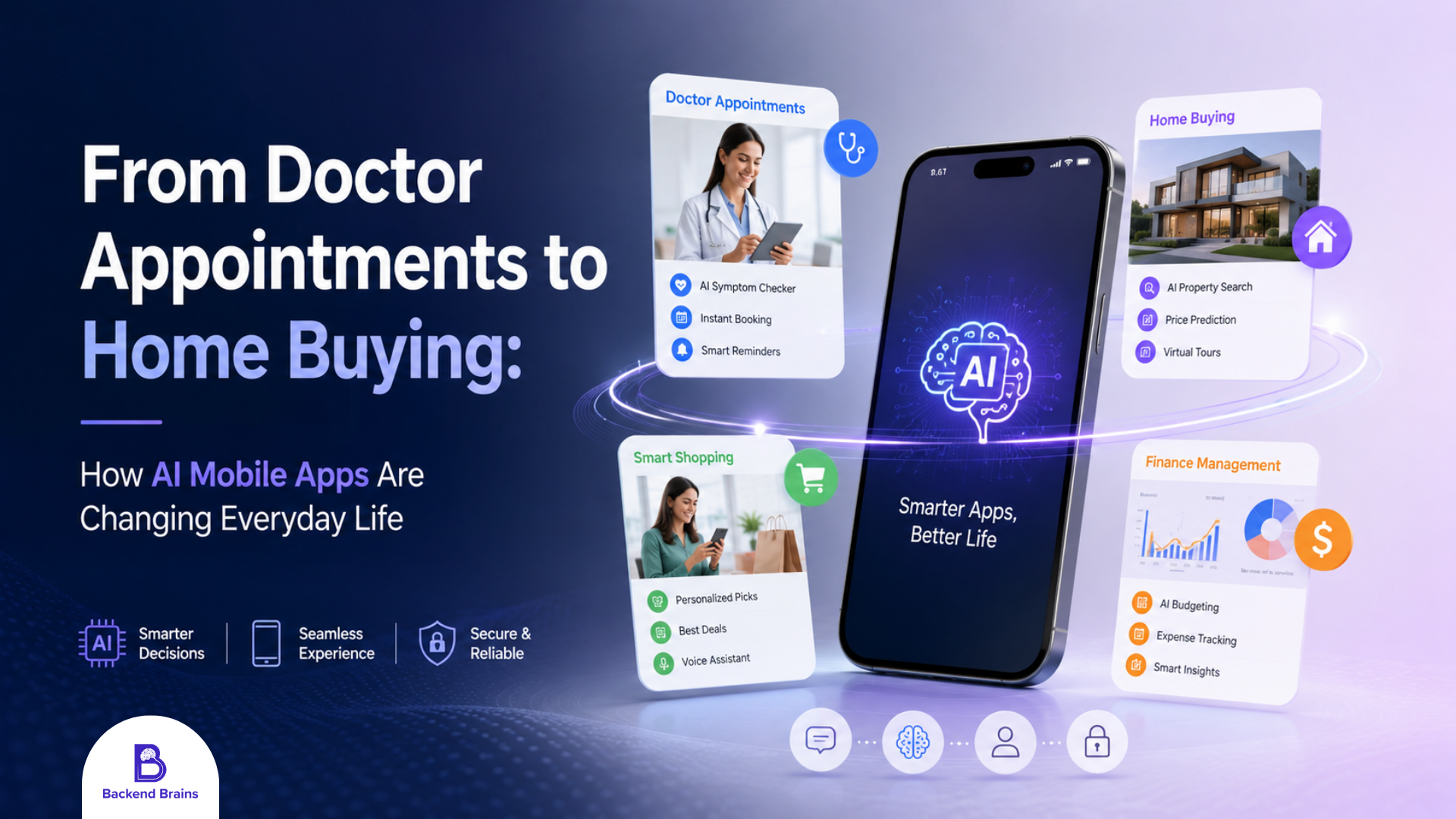
Artificial intelligence is becoming another important layer in modern application development.
Instead of using AI only as a separate tool, businesses can integrate intelligent capabilities directly into their web and mobile products.
Examples include:
- AI-powered chat assistants
- Intelligent search
- Personalized recommendations
- Document analysis
- Automated workflows
- Predictive insights
- Voice-based features
- Content assistance
For example, an eCommerce application could use AI to improve product recommendations, while a healthcare platform could use intelligent tools to help users find relevant information.
This is where AI app development can create new possibilities for businesses looking to make their applications more intelligent and automated.
Security and DevOps Matter Too
Technology selection is only one part of modern application development.
Security needs to be considered from the beginning, including authentication, authorization, API protection, encryption, access control, and secure data handling.
Development teams also need reliable processes for testing, deployment, monitoring, and maintenance.
Tools such as containers and CI/CD pipelines can help teams deliver updates more consistently while reducing manual deployment work.
What Does the Modern Stack Look Like?
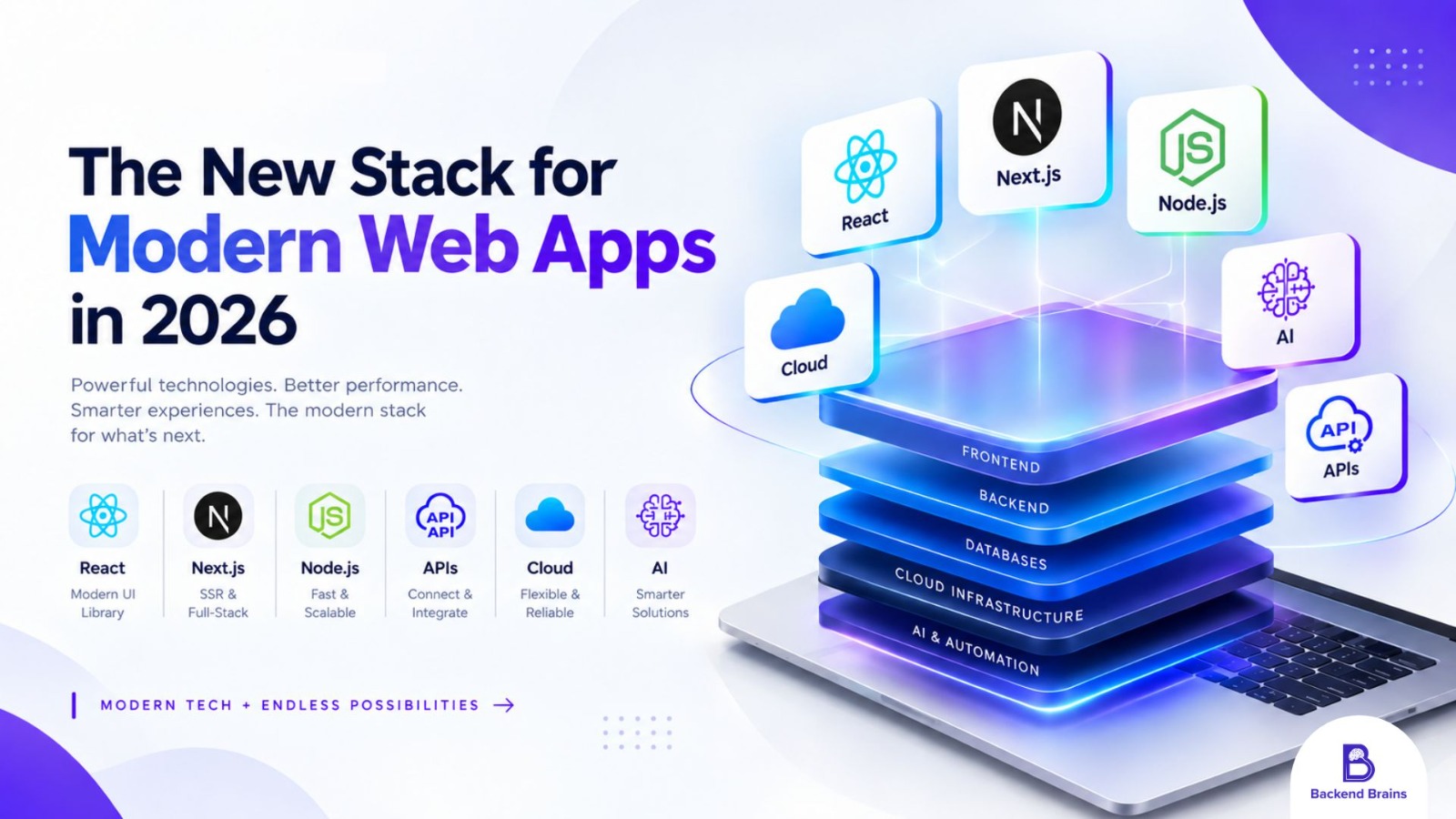
A typical modern application architecture may combine:
Frontend: React / Next.js
Backend: Node.js
Mobile: Cross-platform mobile technologies
APIs: REST / GraphQL
Database: SQL / NoSQL
Infrastructure: Cloud computing
Intelligence: AI services
Operations: Containers, CI/CD and monitoring
This is not a fixed formula. The best stack depends on the application's goals, users, integrations, budget, expected growth, and technical requirements.
Final Thoughts
The modern web application stack in 2026 is not about using every new technology available. It is about combining the right technologies to solve a specific business problem.
React, Node.js, mobile development, APIs, cloud computing, and AI can work together to create digital products that are flexible, scalable, and ready for future requirements.
Whether a business is building a new application or modernizing an existing platform, choosing the right architecture early can make development, maintenance, and future expansion much easier.
Backend Brains helps businesses turn ideas into modern web and mobile applications with scalable architecture, cloud technologies, integrations, and intelligent digital solutions.
Share This Article