
In today’s fast-paced digital era, businesses are under constant pressure to innovate, reduce costs, and scale seamlessly. Two terms that often dominate technology conversations in boardrooms are Cloud and SaaS (Software-as-a-Service). While both play pivotal roles in modern business transformation, they aren’t interchangeable. Understanding their differences—and how they fit into your company’s strategy—is crucial for business leaders aiming to make informed decisions.
What is Cloud Computing?
Cloud computing refers to the delivery of IT services like storage, servers, networking, and databases over the internet. Instead of investing in costly physical infrastructure, businesses can leverage cloud platforms to access resources on demand.
Key Benefits of Cloud Computing:
- Scalability: Easily scale up or down depending on demand.
- Cost Efficiency: Pay only for what you use, reducing capital expenses.
- Flexibility: Access systems and data from anywhere.
- Security: Leading cloud providers offer advanced security features and compliance.
Popular cloud platforms include Amazon Web Services (AWS), Microsoft Azure, and Google Cloud.
What is SaaS (Software-as-a-Service)?
SaaS is a software distribution model where applications are hosted in the cloud and delivered to users via the internet. Instead of purchasing and installing software on individual devices, businesses can subscribe to SaaS solutions and access them through a web browser.
Key Benefits of SaaS:
- Lower Upfront Costs: No need for hardware or complex installation.
- Automatic Updates: Vendors handle maintenance and upgrades.
- Accessibility: Access from any device with an internet connection.
- Collaboration: Multiple users can collaborate in real-time.
Common SaaS examples include Google Workspace, Salesforce, Microsoft 365, and Slack.
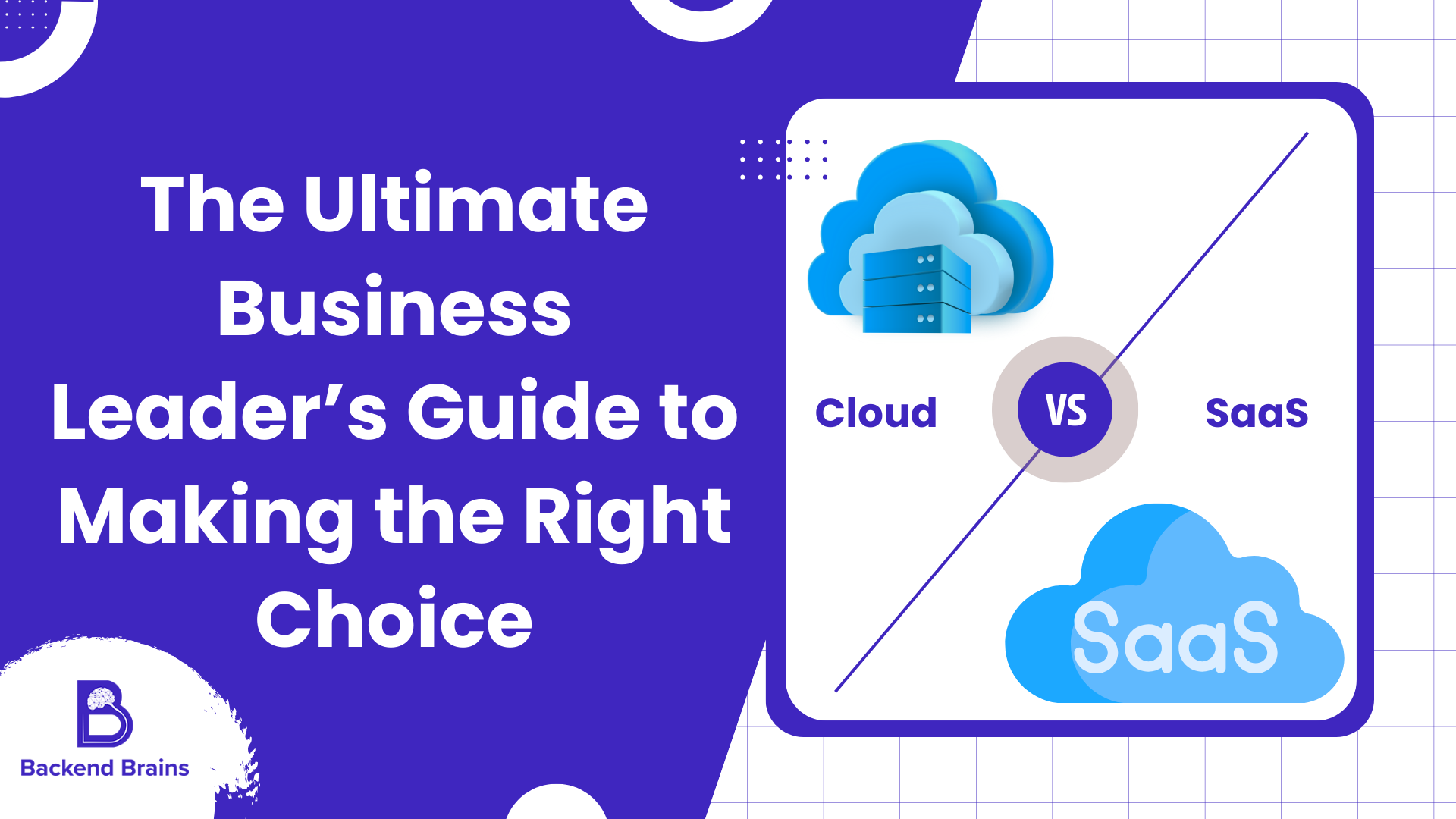
Cloud vs SaaS: What’s the Difference?
While SaaS is built on the cloud, not all cloud solutions are SaaS. Here’s a simple breakdown:
| Feature | Cloud Computing | SaaS |
|---|---|---|
| Definition | Infrastructure and services delivered via the internet | Ready-to-use applications delivered over the internet |
| Control | Businesses manage applications and services on the cloud | Vendor manages everything |
| Customization | Highly customizable | Limited customization |
| Examples | AWS, Azure, Google Cloud | Salesforce, Dropbox, Zoom |
Think of it this way: Cloud is the foundation, while SaaS is one of the services built on that foundation.
Which One Should Business Leaders Choose?
The decision depends on your business needs, IT capabilities, and budget.
- Choose Cloud if:
You want to build custom applications, manage data storage, or integrate various IT resources. Ideal for enterprises with in-house IT expertise. - Choose SaaS if:
You need ready-to-use software for operations such as CRM, communication, or collaboration—without worrying about infrastructure. Perfect for small to mid-sized businesses or startups. - Best of Both Worlds:
Many businesses adopt a hybrid approach, using cloud infrastructure for scalability while leveraging SaaS for day-to-day operations.
Final Thoughts
For business leaders, the choice between Cloud and SaaS isn’t about picking one over the other—it’s about understanding how each fits into your digital strategy. The cloud provides the foundation for agility and scalability, while SaaS offers ready-to-use tools that streamline operations. By leveraging both effectively, companies can reduce costs, enhance productivity, and future-proof their business in the digital age.
Share This Article